About Dr. Anne Bettens
With a PhD in Aerospace Engineering focused on vision-based navigation, Dr. Bettens bridged the gap between academic research and industry application. Her background includes mechanical engineering, a Master’s in aerospace engineering, and valuable research experience in France and at NASA’s Jet Propulsion Laboratory (JPL) in California. She has also lectured in aerospace engineering at the University of Sydney, where she has been recognised for her commitment to student mentorship, innovation, and advocacy for women and minorities in STEM.
Known for her credibility, integrity, and purpose-driven leadership, Anne combines deep technical expertise with a passion for building a more responsible and sustainable space industry.
Watch the Presentation
Key Insights from the Presentation
1. The Problem in Orbit
- Crowded Low Earth Orbit
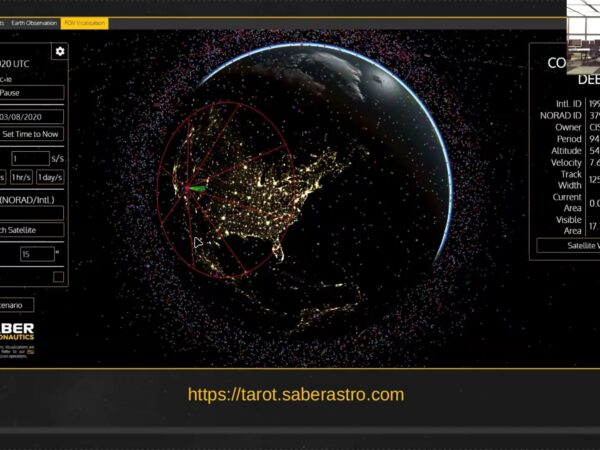
Space is becoming increasingly congested with thousands of active satellites and hazardous space debris, leaving zero room for operational mistakes. - Tumbling Satellites
Nearly half of satellites arrive in orbit spinning or tumbling due to the lack of gravity and atmospheric friction. Until stabilised, these satellites are completely unable to perform vital missions—such as monitoring bushfires, tracking climate change, forecasting weather, or providing internet connectivity. - No Second Chances:
Once launched into space, physical repairs are impossible. Satellite hardware and software must perform reliably from day one.
2. What Prototyping Means in Deep Tech
Prototyping involves building smaller, focused tasks and mini-experiments to gain confidence that a final product will perform as intended. The process relies on a continuous loop:
“Prototyping means making the simplest version first, testing it, finding if there’s any problems or finding how we can improve it, and then going back and creating new versions.” — Dr. Anne Bettens
3. Testing Rigour on Earth
Before sending hardware to space, Deneb Space subjects its prototypes to intense environmental and operational testing on Earth:
- Vibration Testing
Simulates the intense mechanical stress of a rocket launch. - Thermal Vacuum (TVAC) Testing
Ensures components survive the extreme hot and cold temperatures of space. - Hardware & Software Integration
Verifies that the hardware fits into the satellite platform and that all control software executes smoothly.
4. In-Orbit Success and the Future of Autonomous Space Ops
Through rigorous Earth-based testing and iterative prototyping, Deneb Space successfully launched satellite control hardware into space, with units operating reliably in orbit for over two years. Their hardware rapidly stabilises tumbling satellites, bringing them into alignment for mission success.
Looking ahead, Deneb Space is continuing its prototyping efforts by focusing on AI-powered software that enables autonomous satellite operations. This software gives satellites the ability to think for themselves in real time—helping them safely navigate close proximity operations and avoid collisions without relying on continuous ground station commands.