Untangling the Knots: David Reynolds on Space Capability Development
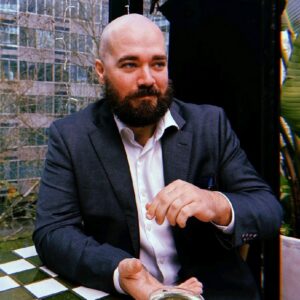
David Reynolds from Aether Space Development discusses the intersection of technology, workforce, and commercial strategies shaping the next generation of Australia’s space ecosystem.
[00:00:22] David Reynolds describes himself as a “TAFE nerd” who earned a master’s degree in tertiary education management from the University of Melbourne[cite: 14]. After managing space research networks and helping university researchers secure project funding, he founded Aether Space Development[cite: 14]. Today, his focus is on capability development—identifying industry issues and constructing strategies that balance technology, workforce development, and commercial sustainability
Australia’s Geographic Edge and “New Space”
[00:03:28] Australia holds a historic position in satellite communications due to its vast geography and diffuse population[cite: 14]. However, the country also plays a vital role in global network geography because it sits on the opposite side of the planet (the antipode) from much of the Global North
[00:04:10] This makes Australia a highly valued partner for low Earth orbit (LEO) satellite systems, which move rapidly and require continuous ground tracking and data routing connections across Europe, North America, and Asia[cite: 14]. This collaboration feeds directly into New Space—a generation of commercial space activity driven by open markets rather than traditional, purely government-funded scientific research programs
The Multi-Domain Workforce Loop
[00:06:29] The space ecosystem is expanding beyond hyper-specialised research engineers[cite: 14]. Because the industry touches many sectors, there are unique access points for workers from unexpected paths[cite: 14]. David points to his own background as an example: he holds a Bachelor of Music
[00:07:53] “When I did music, I learnt about signal processing because I was learning about mixing, making, recording music, and the history of waveforms and oscillators,” David explains[cite: 14]. This understanding of waves and frequencies translates directly into radio frequency (RF) and satellite communications[cite: 14]. In the same way, global space programs like NASA require technical trade skills, looking to TAFE ecosystems to build pipelines for highly skilled welders and technicians to construct hardware
The Power of Systems Thinking
[00:16:54] To manage these overlapping demands, David advocates for Systems Thinking—understanding how individual components interact within a wider “system of systems”[cite: 14]. While heavily utilised in the United States, formal training in system engineering and systems thinking remains a crucial area of growth for Australia’s expanding technical infrastructure
[00:18:41] True systems planning is intensely collaborative[cite: 14]. Rather than operating under a top-down hierarchy where a single leader dictates every choice, successful space architecture relies on a network of interlinked decision-makers delivering data incrementally from their distinct operational areas
Advice for iSTEM Teams: Sculpt the Solution
[00:20:24] For students tackling multi-pronged challenges—such as growing food or surviving extreme conditions—David’s key piece of advice is simple: do not decide what the final solution looks like on day one
[00:20:36] “It’s kind of like sculpting a statue out of stone,” David notes. “You just chip away pieces until a thing reveals itself”[cite: 14]. Instead of forcing a premature conclusion, teams should spend time on the initial identification stage: documenting user needs, defining project requirements, and allowing space for creative, step-by-step collaboration.