From Poles to Planets
Legendary adventurer Eric Philips discusses the transition from polar guide to private astronaut, explaining how teamwork and extreme nutrition are the common threads between the Arctic and orbit.
[00:00:15] Eric Philips has spent his life leading expeditions to the most remote corners of the Earth. As the first person to ski to both the North and South Poles from the coast in a single year, he is now applying those survival skills to his role as a private astronaut on the historic Fram2 mission.
Fram2: The First Polar Orbit
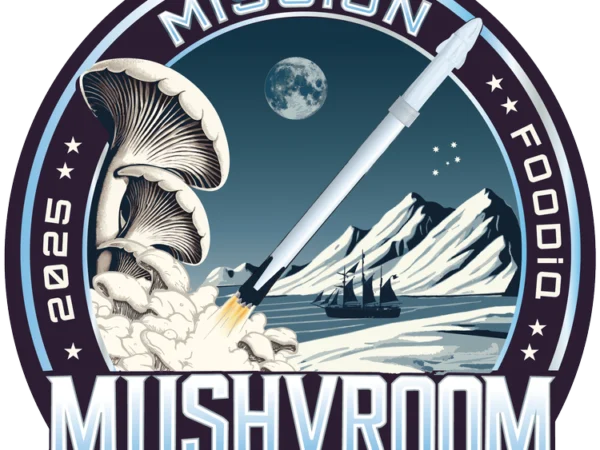
[00:01:45] The Fram2 mission is a groundbreaking SpaceX mission designed to be the first human spaceflight to orbit Earth over the polar regions. Named after the famous Norwegian ship Fram used by Arctic explorers, the mission aims to study unusual light phenomena like STEVE (Strong Thermal Emission Velocity Enhancement) and the effects of space radiation on the human body.
[00:02:30] Eric explains that polar exploration and spaceflight share a “hostile environment” DNA. In both cases, humans are entirely dependent on life-support technology and their teammates to survive in conditions where the outside temperature can kill in minutes.
Survival Fuel: Caloric Density
[00:04:10] Whether trekking across the Antarctic ice or preparing for life in a spacecraft, nutrition is a matter of engineering. Eric discusses the need for high-density energy. In the cold, the body is a furnace that requires massive amounts of fat to maintain a core temperature of 37°C.
[00:05:15] Eric famously consumes blocks of butter during polar treks to reach the 6,000+ calories required daily. He notes that while space food is more varied, the lessons of efficiency—packing the most energy into the smallest weight—remain identical when every gram launched into space costs thousands of dollars.
Team Cohesion in Isolation
[00:07:45] Isolation is one of the greatest challenges of long-duration missions. Eric emphasises that a team must function as a single organism. “In a tent during a blizzard or in a capsule in orbit, there is no ‘individual’ success,” he says. “The team is the unit of survival.”
[00:09:20] He shares that his role as a polar guide taught him to read a teammate’s face for signs of stress or physical decline before a word is even spoken. This high level of situational awareness and empathy is exactly what space agencies look for when selecting crews for the Moon and Mars.
The Explorer’s Mindset
[00:11:30] Eric encourages students to embrace the “explorer’s mindset”—being comfortable with uncertainty and prepared for technical failures. Whether fixing a broken sled binding in -40°C or troubleshooting a sensor on a spacecraft, the ability to stay calm and solve problems with limited resources is the hallmark of a true adventurer.
[00:13:00] “Space is just the next great polar desert,” Eric concludes. By studying how we survive the extremes of our own planet, we are writing the manual for how humanity will eventually live among the stars.