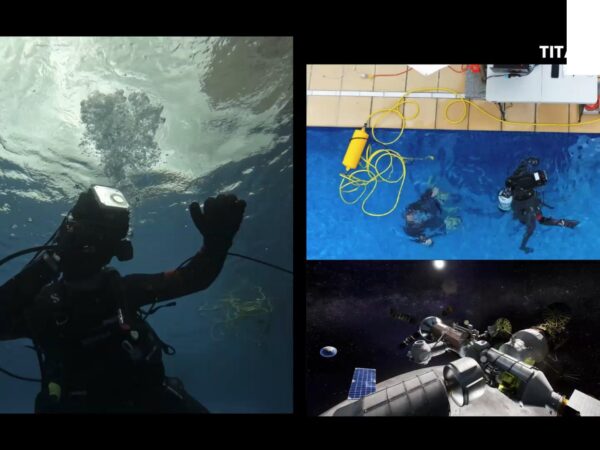
Digital Twins: Reimagining Space Exploration from the Couch
Harrison Verrios from Nominal Systems explains how digital twin technology allows engineers to simulate, visualize, and optimize complex satellite missions before they ever leave the ground. He explains how creating virtual replicas of spacecraft allows engineers to “fail virtually” so they can succeed in the real world, potentially saving millions of dollars in mission costs.
[00:00:26] Nominal Systems specializes in digital twin software for spacecraft simulations. A digital twin is a high-fidelity virtual replica of a physical asset, such as a satellite. Instead of launching a satellite and discovering a flight software error in orbit, companies can use these digital twins to simulate their entire mission beforehand, identifying and fixing key issues in a safe, virtual environment [00:01:02].
The 30% Failure Rate
[00:01:18] The financial stakes of space missions are incredibly high. Research shows that over 30% of spacecraft fail on their first launch, either because they were configured incorrectly or because their software was untested in a true orbital environment. Digital twins mitigate this risk by allowing engineers to analyze data and visualize outcomes long before launch [00:01:26].
Visualizing the Invisible
[00:01:46] Spacecraft are typically too small and move too fast (thousands of kilometers per second) to be seen from the ground. A digital twin allows mission operators to visualize exactly what their spacecraft is doing and where it is pointing [00:02:05]. By ingesting live data streams, the simulation can calculate complex outputs, such as exactly how much power a solar panel is producing based on its angle relative to the sun [00:02:26].
Desktop vs. Virtual Reality
[00:02:51] While desktop computers remain the primary tool for detailed engineering, VR headsets are becoming a powerful way for operators to “stand” in space next to their hardware. This immersive perspective allows for more intuitive control and a better understanding of spatial awareness in orbit [00:03:12].
Beyond the Stars: Air and Sea
[00:03:54] While Nominal Systems started in space, digital twins have massive applications in other industries. The company is now moving into the maritime and aviation sectors, creating digital twins of ships in the ocean and entire networks of aircraft [00:04:13]. The ultimate goal is to create one central “hub”—a digital twin of everything—where space companies can see how their hardware fits into the entire universe [00:05:05].
Precision Matters
[00:05:03] When simulating a mission, tiny errors have massive consequences. For example, if a digital twin’s thruster angle is off by just a few degrees, the virtual spacecraft will end up in the wrong location after just one orbit [00:05:38]. This level of precision makes digital twins an essential “safe space” for trial and error before committing to an expensive launch [00:06:02].
Home » Articles »