In-Space Servicing: Making Satellites Last
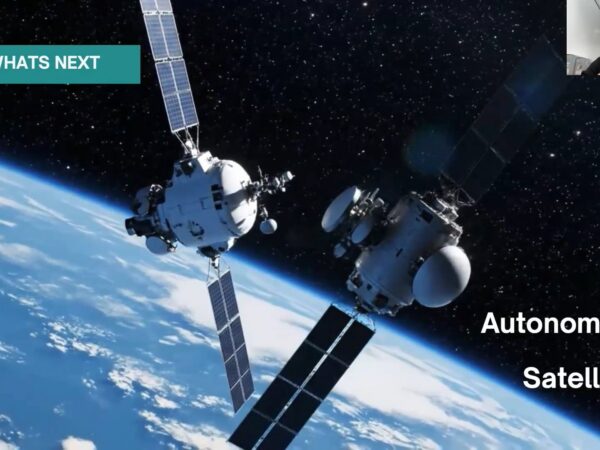
Brian Roberts explains how NASA uses robotics to refuel, repair, and build massive structures in space to extend the life of our most important scientific missions. By developing technologies to service and refuel spacecraft in orbit, NASA is moving away from the “throw-away” paradigm of satellite use and toward a sustainable future for human exploration.
[00:00:12] Brian Roberts is an aerospace engineer at NASA Goddard who specializes in space robotics. Over the last 12 years, he has transitioned from a student intern to a civil servant, focusing on technologies that allow robots to find, catch, and repair satellites that were never originally designed to be serviced.
The Problem: Space is “One and Done”
[00:03:22] Currently, when a satellite runs out of fuel or a part breaks, it essentially becomes space junk. We throw it away and launch a new one in its place. NASA is working to change this by developing fluid transfer systems that allow a robot to put “gas” (propellant) back into a satellite, extending its scientific mission by years or even decades.
The Tools of the Trade
[00:01:54] Servicing a satellite requires several key technologies working together:
- Rendezvous Sensors: These allow a servicing robot to find a satellite from far away and determine exactly how it is moving so the robot can “catch up” to it safely.
- Robot Arms: Highly precise mechanical arms reach out to grapple the satellite and perform delicate repairs, much like astronauts did during the Hubble Space Telescope servicing missions.
- Central Computers: These act as the “brain,” sending complex commands to the robotic mechanisms to perform tasks remotely from Earth.
Practice Makes Perfect
[00:04:04] NASA doesn’t just “jump” to a final mission in space; they practice extensively on the ground. Brian’s team performs remote refueling demonstrations at the Kennedy Space Center in Florida while controlling the robots from Maryland. This helps them navigate the two-second time delay they will face when operating robots in orbit.
[00:04:16] On the International Space Station, robots are already testing tools designed to work with satellite fuel valves. These experiments prove that robots can handle the harsh lighting and zero-gravity conditions of space before we send them to work on multi-billion dollar satellites.
Enabling the Future of Exploration
[00:05:48] Beyond fixing old satellites, in-space servicing allows us to build things that are too big to fit inside a rocket. Robotic assembly will enable the construction of massive telescopes to see farther into the universe and large interplanetary ships for human travel.
[00:06:03] In-space refueling also makes deep-space travel more efficient. Spacecraft can launch with less fuel and more supplies, refilling their tanks at “gas stations” in orbit or at the Moon before heading out to the far reaches of the solar system.
Home » Articles »