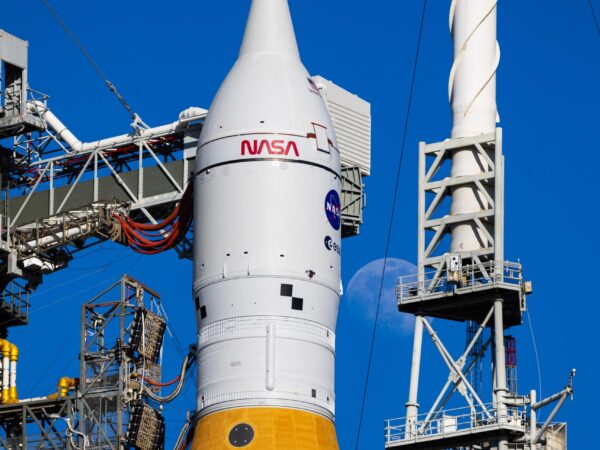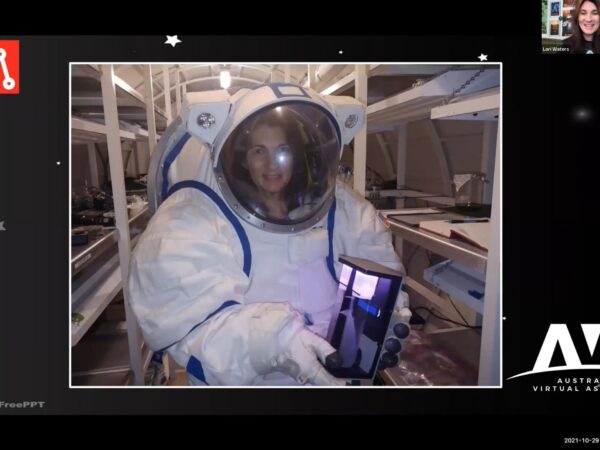
Jim Christensen from the Aldrin Family Foundation takes us through the Apollo era, into Artemis, and looks beyond to how we might create a home on the Moon.
[00:00:13] Jim Christensen works for the Aldrin Family Foundation, where the mission is to inspire the next generation of space explorers. The foundation’s patron is Buzz Aldrin, and it is led by Buzz’s son, Dr. Andy Aldrin.
[00:00:48] Over 50 years ago, Neil Armstrong and Buzz Aldrin became the first humans to walk on the Moon. While that was a monumental moment in history, humanity is now preparing to return through the Artemis program—named after the sister of Apollo. This time, the goal is to land the first woman and the next man on the lunar surface.
[00:01:37] Unlike the Apollo missions, Artemis is designed for a sustainable presence. We expect to land at the South Pole, where we believe the most water is located. By mining water-bearing rocks and using the almost uninterrupted solar supply at the pole, we can produce drinking water and rocket fuel (oxygen and hydrogen).
[00:02:57] The mission has three main components: an orbiting station called “Gateway,” a lander for the surface, and a structure where people will live and work. Soon, we will look up at the Moon and know there are people living there permanently.
[00:03:39] Technology has changed drastically since the first landing. Jim reflects on the power of modern mobile phones compared to the computers used for the Apollo missions. Modern smartphones actually have significantly more computing power than the guidance computers used in the lander, the Command Module, and the rocket combined.
[00:05:35] Living on the Moon requires the same five essentials we need on Earth: air, water, food, shelter, and energy. Whether it is an HVAC system in your house or a life-support system on a lunar base, these systems are on a shared continuum of engineering. To live sustainably, we must collect data on exactly how much of these resources we use every day.
[00:08:19] The future of the Moon includes space tourism. Just as we’ve recently seen the first civilian flights into space, people will eventually want to visit historic sites like Tranquility Base. Protecting these historic sites, such as Buzz Aldrin’s famous footprint, will be a vital task for the first lunar settlers.
[00:10:47] There are many ways to participate in this future, such as designing lunar games that work in 1/6th gravity or figuring out how to mine and process ore in space to build giant structures. For more resources on these challenges, visit the Aldrin Family Foundation or check out “Project Janos.”
Home » Articles »