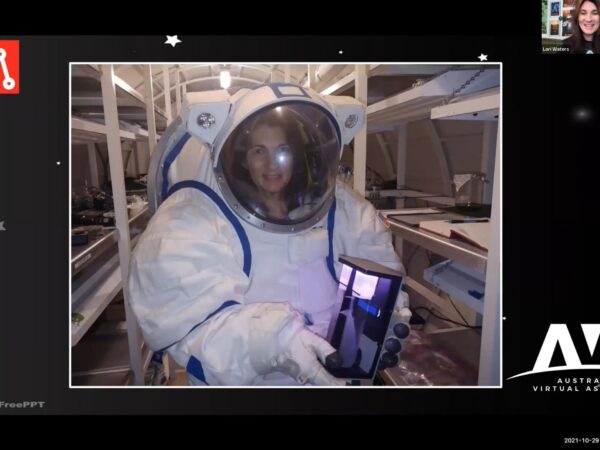
Ted Tagami from Magnitude.io talks about the International Space Station and its context for humanity’s future in space.
[00:00:13] Welcome to the Australian Virtual Astronaut (AVA) challenge. Instead of being stuck at home, let’s imagine the possibilities of being in a space capsule. We do a lot of our work on the International Space Station (ISS), which has been in orbit for more than 20 years.
[00:00:38] This station is massive—larger than a soccer pitch end-to-end. It weighs more than 450 tons and travels at an extraordinary speed of seven and a half kilometers every second to stay in orbit 400 kilometers above our planet.
[00:01:06] While the ISS is where we do research today, we want you to go further. This decade, we are going to the Moon with a person of color and a woman on the surface. We are looking at putting a settlement on the Moon and then, just a few years later, expecting to go to Mars.
[00:01:42] Solving these challenges requires every discipline: biologists, chemists, physicists, philosophers, artists, and engineers. It is a planetary problem that makes us think about life both in space and here on Earth.
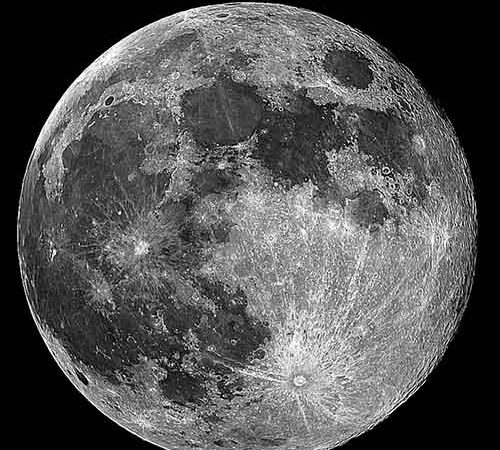
[00:02:12] The Moon is almost 400,000 kilometers away. To walk there non-stop would take over nine years, but a spacecraft can get you there in about a week. Challenges on the Moon include 1/6th the gravity of Earth and abrasive dust that acts like sandpaper.
[00:03:05] There is no atmosphere and significant radiation from the sun. Unlike Earth, which has a magnetic field and ozone layer for protection, the Moon is exposed. It also has extreme temperature swings, from 127°C in two weeks of daylight to -170°C in two weeks of darkness.
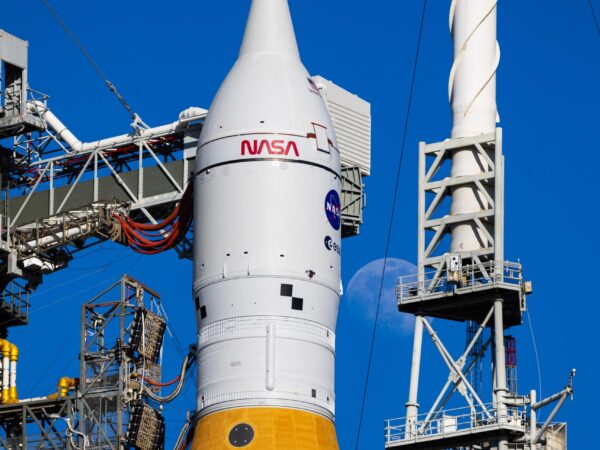
[00:04:15] Under the Artemis program, several missions will go to the surface, and a new space station called “Gateway” will be built in lunar orbit. This will allow astronauts to search for water ice (H2O) and other resources.
[00:04:39] At Magnitude.io, we grow plants in space. Our ExoLab missions look at how plants behave in microgravity. We want to know how you might develop a habitat for plants to provide a food source for astronauts. Which plant would you choose to grow?
[00:06:51] Our focus is not just space; it’s about how we feed our own planet. The United Nations has “Sustainable Development Goals,” such as Zero Hunger and Clean Water. We hope your exploration can help solve these problems on Earth as well.
[00:08:17] As you participate in this challenge, remember: every idea is a great idea. Your imagination and creativity are where the best innovations come from. Don’t let anyone squeeze that out of you!
Home » Articles »