Autonomous Robotics: The Brain Behind the Rover
Tenzin Crouch from Element Robotics explains how autonomous navigation and simulation environments are paving the way for humans to become an interplanetary species. Tenzin shares his journey from building DIY quadcopters at age 17 to leading the team developing the autonomous navigation “brain” for Australia’s first lunar rover.
[00:00:10] Tenzin Crouch is helping humanity explore the next frontier. His company, Element Robotics, specializes in autonomous navigation software—the “brain” that allows robots to operate on inhospitable worlds like the Moon and Mars without constant human intervention.
Australia’s First Lunar Mission
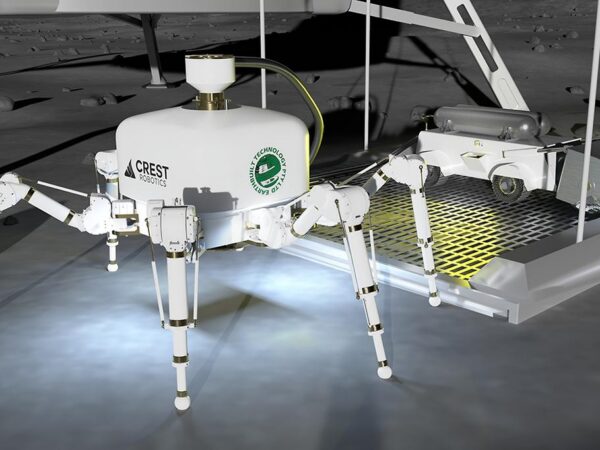
[00:01:54] The Moon is a critical testing ground because it is close to Earth and contains minerals, water ice, and hydrogen that can be used to make fuel and oxygen. Australia is currently building a small “Roo-ver” (part of the ELO2 consortium) that will land on the Moon to sample these resources.
[00:03:09] In 2023, Tenzin’s team demonstrated a prototype rover that was controlled live from Denver, Colorado, while driving in Australia. This test simulated the communication lag and environmental challenges of operating hardware on the lunar surface.
What is “True Autonomy”?
[00:05:22] Autonomy means different things depending on the complexity of the task. Tenzin breaks it down into levels:
- Level 0 (Motor Control): The robot maintains a specific speed or direction automatically.
- Level 1 (Navigation): The robot goes to a set location while avoiding obstacles, similar to a car using Google Maps.
- Level 2/3 (Decision Making): The robot independently decides which location to visit and plans the best path to get there based on mission objectives.
[00:12:05] Modern robots often use “classical” deterministic algorithms because they have limited computing power—sometimes less than a modern smartphone. To succeed, engineers must take sensory inputs (eyes and ears) and create a representation of the world that allows for complex behavior without crashing the system.
Learning the Code: Beyond “Vibe Coding”
[00:08:45] While Python is a great starting language, Tenzin warns against “outsourcing” your learning to AI. Using Large Language Models to write all your code means you never learn the fundamental algorithms. He recommends students build systems like **PID controllers** (Proportional-Integral-Derivative) from scratch to truly understand when and why a system fails.
The Future: 100,000 Robots on the Moon
[00:17:42] By mid to late-century, Tenzin predicts a lunar base with 1,000 humans supported by 100,000 robots. Because the Moon has no atmosphere, robots will be responsible for the “heavy lifting”—mining oxygen, building habitats, and growing food—allowing humans to focus on science and exploration.
[00:23:01] Tenzin’s path involved 13 years in the Air Force and studying at Carnegie Mellon University. His advice? “If you find something fun, just do it.” Whether it’s Lego, building your own computer, or joining a university rover challenge, practical experience is the best pathway into the industry.
Home » Articles »