Australian Virtual Astronaut Challenge
Grow for Launch
Preparing for a lunar growth mission!
The challenge:
- Complete a scientific investigation of plants grown without soil and in different nutrient concentrations.
- Re-think the design of the growth chamber and nutrient and light conditions for optimal growth.
- Complete a food sensory test to help think about what makes food enjoyable.
- Create a delicious plant-based recipe based on your produce.
- Extended Challenge: Design your own solution using the iSTEM framework!
Includes the Grow for Launch Kit
- Dependent on the kit you receive!
- Please note that the Osmocote and the Corinader seeds are in separate bags.
- You will need to provide two soft drink bottles with wide openings (34mm) and any substrate if mentioned.
- Whilst stocks last!
There are 3 different handbooks, depending on the ground trials that are sent to you.
- Version1 – Grow for Launch – Handbook (gyrosnap + hydrogel)
This has the gyrosnaps and hydrogel in it.
(all kits now sent) - Version 2 – Grow for Launch – Handbook (gyroflex)
This has the gyroflexes in it.
(all kits now sent) - Version 3 – Grow for Launch – Handbook (Substrate test)
This is about testing your own substrate.
(join this substrate test!)
Partners
- ARC Centre of Excellence in Plants for Space
- Magnitude.io
- AVA Challenge


Steps
Control the variables, measure the results
Steps:
- Read “Growing Plants in Space” in the resource pack
(There are 3 versions of this experiment, please refer above) - Follow the Experiment Method to test your hypothesis.
- Record everything you do. Use the Mission Report to record your hypothesis and data
- Use your data to see if your Hypothesis is correct
- Log your data with Grow for Launch Mission Control
Join the Grow for Launch!
Whilst stocks last!
About Plants for Space
- Complete nutrition from plant-based foods.
- Zero waste optimised for control environments.
- On-demand bioresource production.
- Future-ready workforce and society.
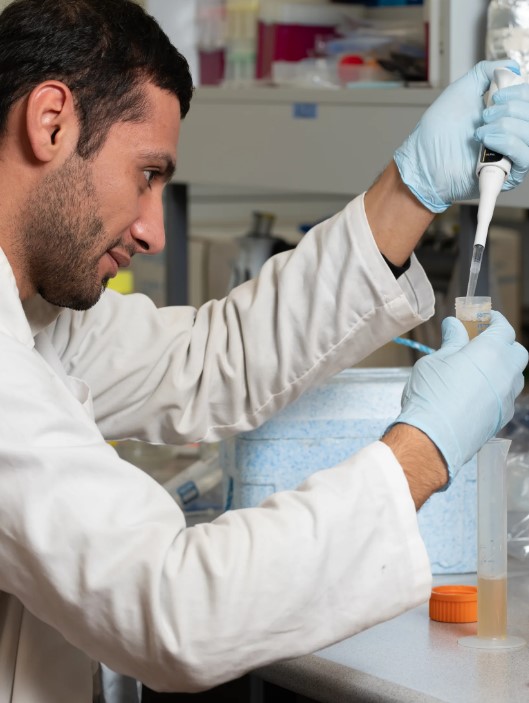
Learn more about the importance of Plants for Space with Dr Frazer Thorpe
Dr. Frazer Thorpe, the Education and Engagement Manager for the ARC Centre of Excellence in Plants for Space (P4S).
He discusses the work P4S is doing across multiple Universities and collaborators on the Artemis III LEAF project, which is part of the mission to grow the first plants on the surface of the Moon.
Option:
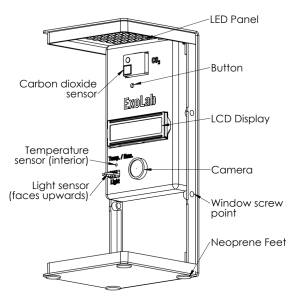
Exolab
The ExoLab system can be purchased but is not required!
ExoLab is a network of science laboratories that connect Schools, Science Centers, Libraries, and Museums around the world. Just like payloads that goes to destinations like the International Space Station, your ExoLab is just 10cm x 10cm x 20cm. In Grow for Launch, ExoLab can help you record detailed information about your experiment.
In your ExoLab, we track and measure different conditions, such as how hot or cold it is (temperature), how wet or dry it is (humidity), how much light there is (lux level), and how much carbon dioxide (CO2) is present. There is a camera in the lab that takes a picture every hour. The images from this camera and the data from these measurements are then shown together. You can compare the information from your lab to other labs all over the world.
Perhaps you will design and build your own lab in the AVA design challenge?
Learn more
Listen as experiment lead Ted Tegami from Magnitude.io and Ben Newsome from Fizzics Education talk about the Simple Seeds experiment.